

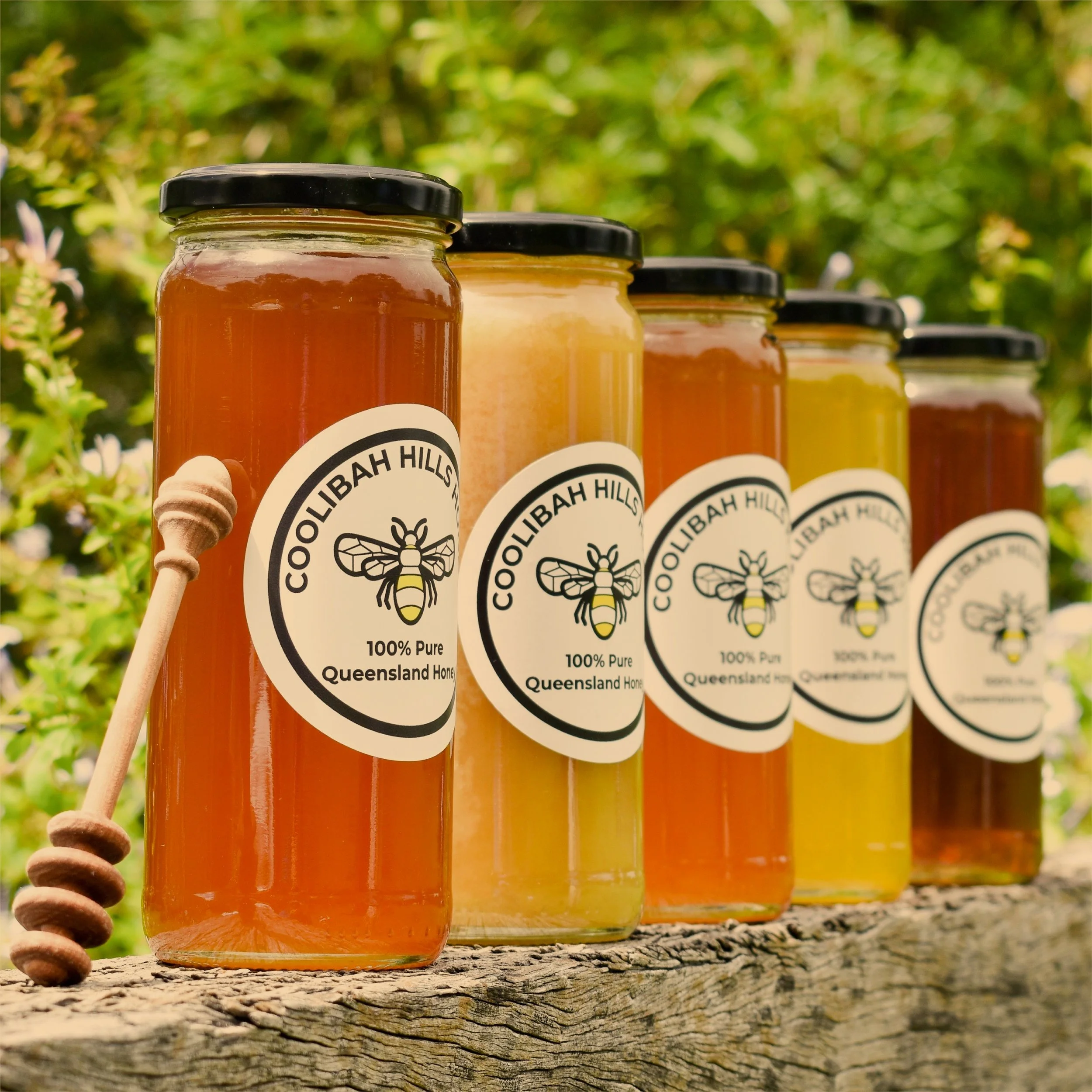
The Facts Behind
CANDIED HONEY
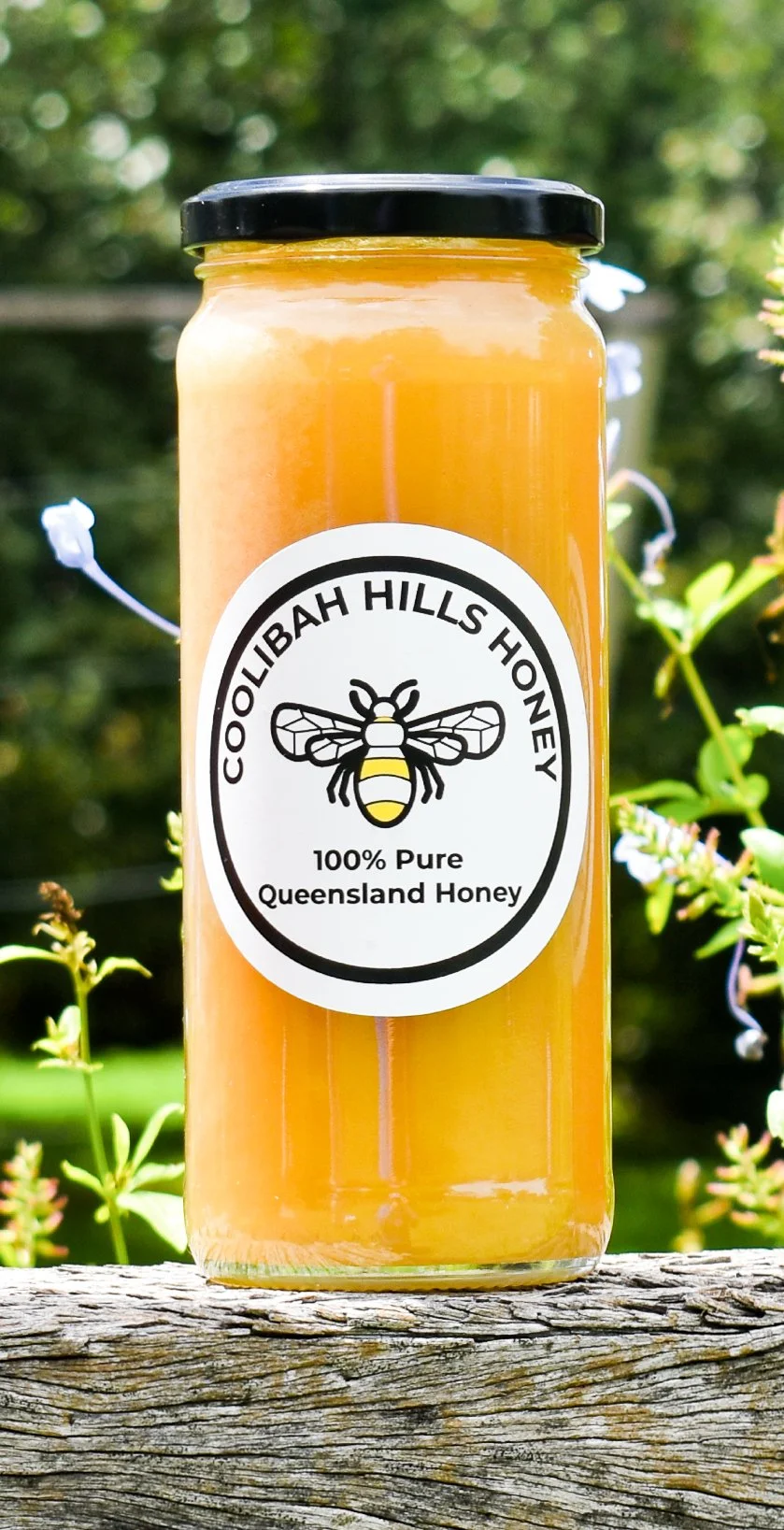
Everything you need to know about Candied Honey.
WHY DOES HONEY CRYSTALLISE?
Honey is a super-saturated sugar solution with more than 70% dissolved sugars and less than 20% water. The bees make this magical compound in the heat of their hive using the enzymes and other chemicals found in the pollen and nectar they collect during their daily work.
The main sugars in honey are fructose and glucose and it is the ratio between these sugars that determine how quickly the honey will candy. There are many other sugars in honey in minute quantities.
Small bits of pollen in the honey provide an excellent base to encourage crystallisation. It is the glucose that crystalises. Floral varieties crystallise quickly as they have a low fructose to glucose ratio whereas Eucalypt honeys, with a higher fructose to glucose ratio, crystallise more slowly.Some honeys form very fine crystals whilst others have a more gritty texture.
The Facts about Candied Honey…
In most honeys, crystallisation or candying occurs naturally over time. It is actually a good indication that your honey is pure, unadulterated and untreated, and the beneficial properties of honey have not been leached out.
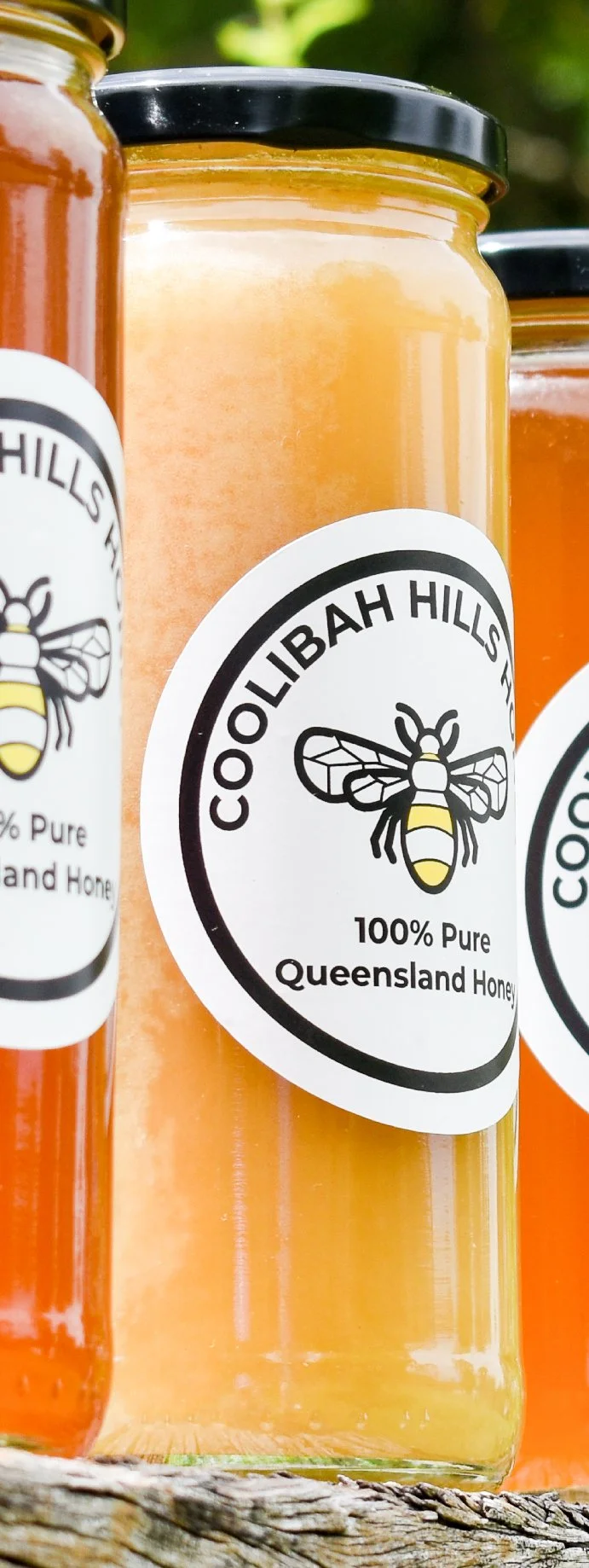
Candied honey has not deteriorated, is not rotten, and still retains all the properties, flavour and aroma of liquid honey. It can still be used just as you use your liquid honey. In fact, candying turns honey into a spreadable golden delight.
Processed honey found in supermarkets is heated to become more viscous (thinner) so that it can be blasted through super fine filters. This retards the crystallisation process.
The heating process (pasteurisation) destroys many of the nutrient and therapeutic properties of honey. The fine filters remove pollen, enzymes and propolis, the super-rich particles which make honey so special.
It is these particles that trigger crystallisation by acting as the nuclei to the formation of sugar crystals. Once the particles have been removed, the honey becomes more stable and clearer. A pure, raw honey is more cloudy than heated honey and is packed with fragrance and flavour compounds, vitamins and minerals, enzymes and amino acids.
HOW TO DE-CANDY HONEY?
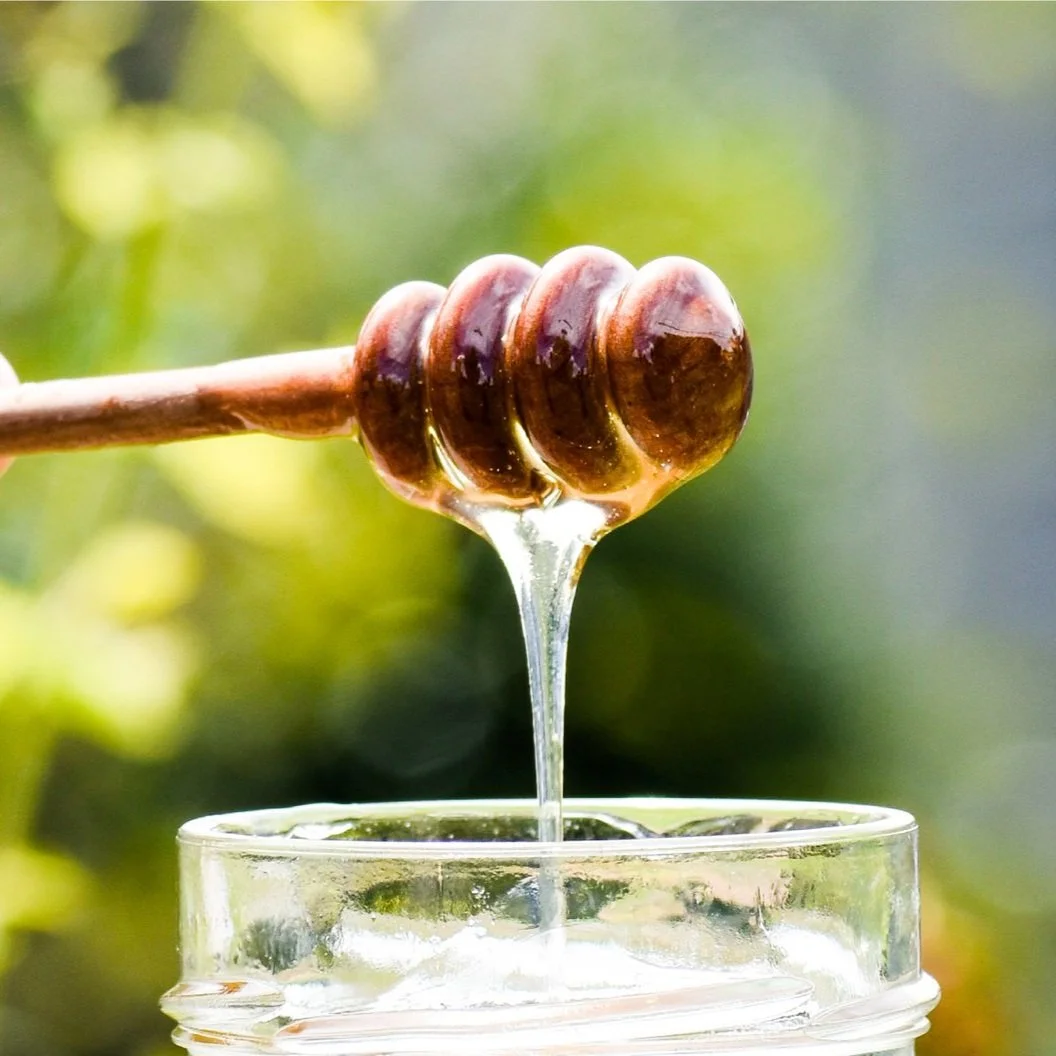
De-crystallising honey is a simple process, but it is important to remember that too much heat may harm the integrity of your honey. Place your jar of honey in a water bath at about 30° - 40°C for 15 - 20 minutes or more if needed. Stir the honey occasionally to help dissolve the sugar crystals. Or leave it in the sun for a short while to warm it up.
Try not to go above 40°C. Excessive heat will degrade the aroma, flavour and other good qualities in honey. Definitely don’t put it in the oven or on the stove. We don’t recommend micro-waves either as it is very hard to control the heat. Bees run their hives around 30°C so if you prefer liquid honey, store your honey in a warm place.